
Maternity Poses That Actually Work on the Beach (And 4 to Avoid)
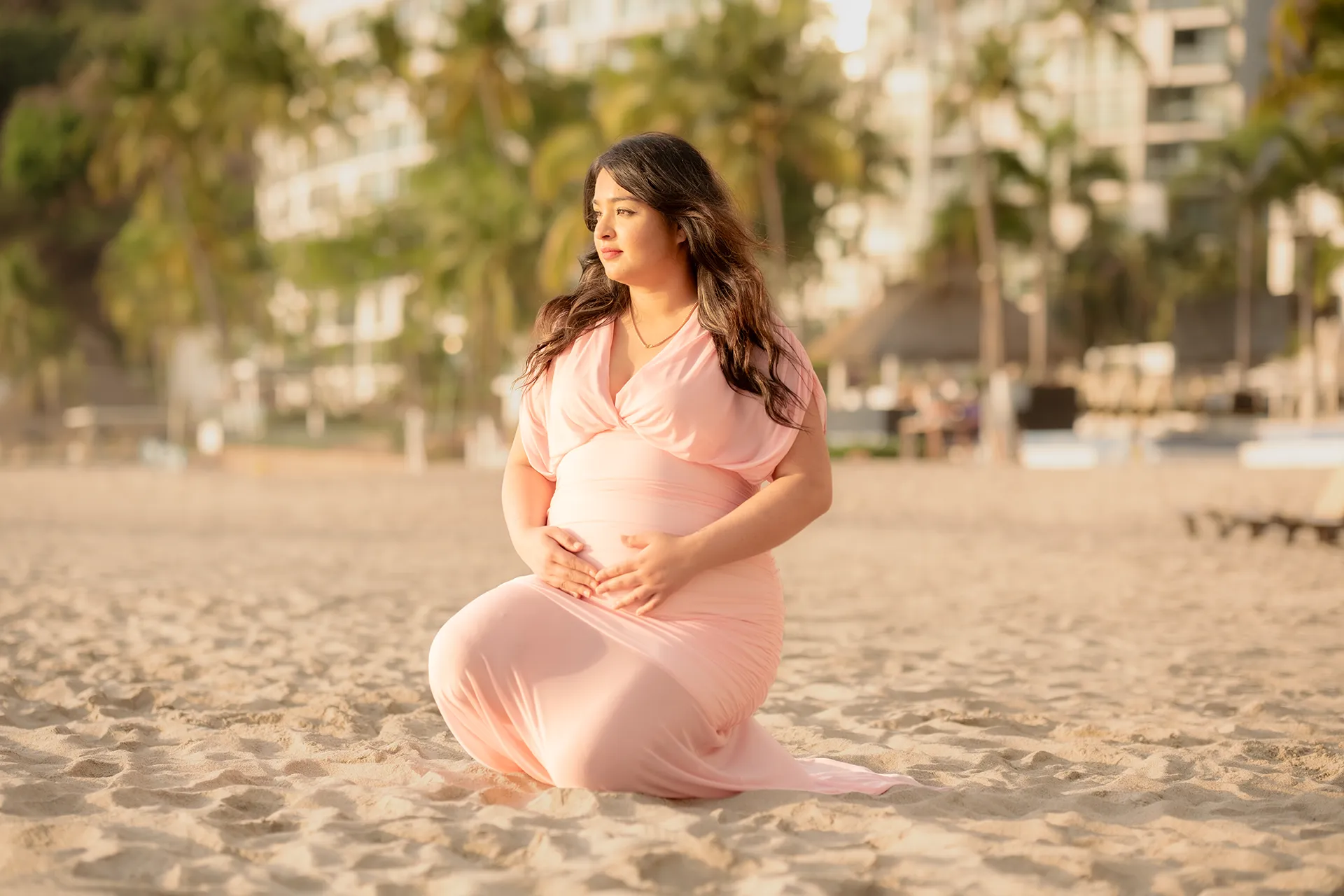
If you’ve ever typed “maternity poses” into Pinterest, you’ve seen thousands of results — most of them shot in studios, in fields, or in living rooms with perfect white walls. Beautiful, yes. But when you’re standing barefoot on a beach in Puerto Vallarta with the Pacific behind you and golden hour fading fast, those poses don’t always translate.
Beach maternity photography has its own rules. The light is directional and dramatic. The environment is dynamic — wind, waves, sand. And the bump, which is the whole point, needs to be positioned carefully to read as the powerful, beautiful thing it is.
After years of photographing expecting mothers along the beaches of Puerto Vallarta, Conchas Chinas, and the Riviera Nayarit, here are the five poses that consistently produce stunning results — and four common mistakes worth knowing before your session.
The 5 Poses That Work
1. The Classic Side Profile
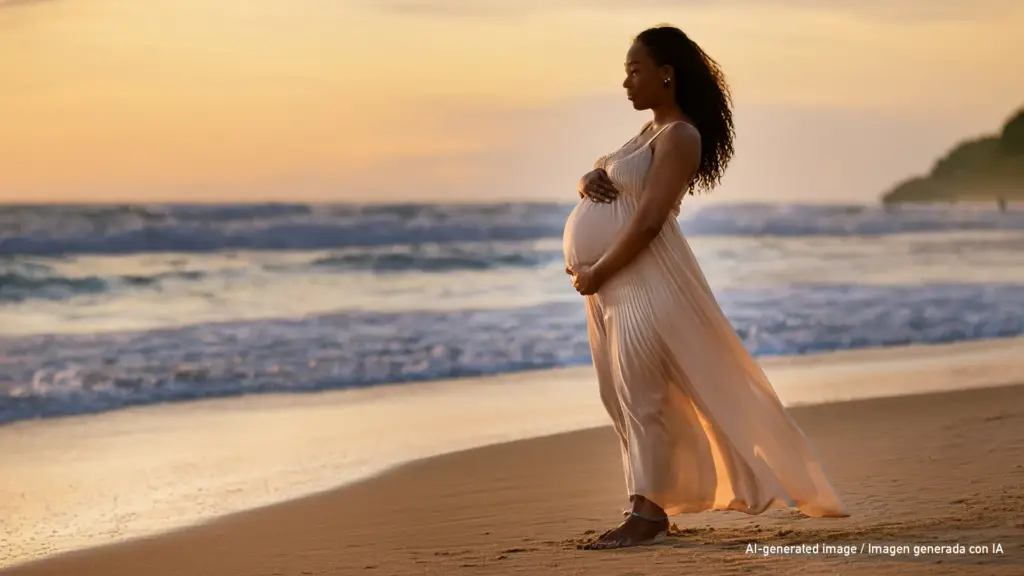
This is the foundational maternity pose for a reason: nothing shows the bump more clearly or more beautifully than a true side profile. Stand perpendicular to the camera, both hands gently cradling the belly — one above, one below — and let the horizon do the rest.
On a beach, this pose benefits enormously from backlighting. When the sun is behind you and slightly to one side, the light wraps around the silhouette of your bump and creates a natural rim that separates you from the background. It’s one of those images that looks effortless and is technically precise at the same time.
What makes it work on the beach: The open horizon gives the composition room to breathe. The bump reads as the clear subject, and the ocean becomes context rather than distraction.
2. Movement and Wind
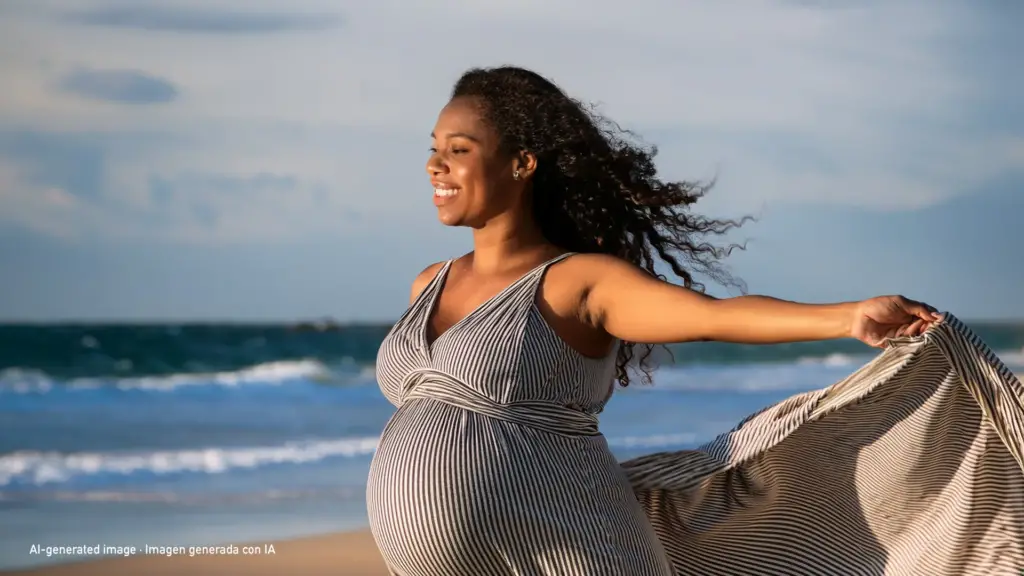
A beach gives you something no studio can: natural movement. Wind-caught fabric and hair in motion transform a static portrait into something cinematic — and for maternity photography, that energy communicates something important. This isn’t a woman posing. This is a woman alive in her body, in her moment.
For this pose, stand at a slight angle to the camera with arms extended outward or back, letting the dress and hair move naturally. The key is not forcing it — let the breeze work, and let the photographer time the shot.
What makes it work on the beach: The environment provides the movement. You don’t need to do anything dramatic — the wind does it for you. Pair with a flowy dress in a light, solid color for maximum effect.
For wardrobe ideas that photograph well in this kind of shot, see What to Wear for a Puerto Vallarta Photoshoot: Style Tips for Couples & Families .
3. Arms Up — The Power Pose
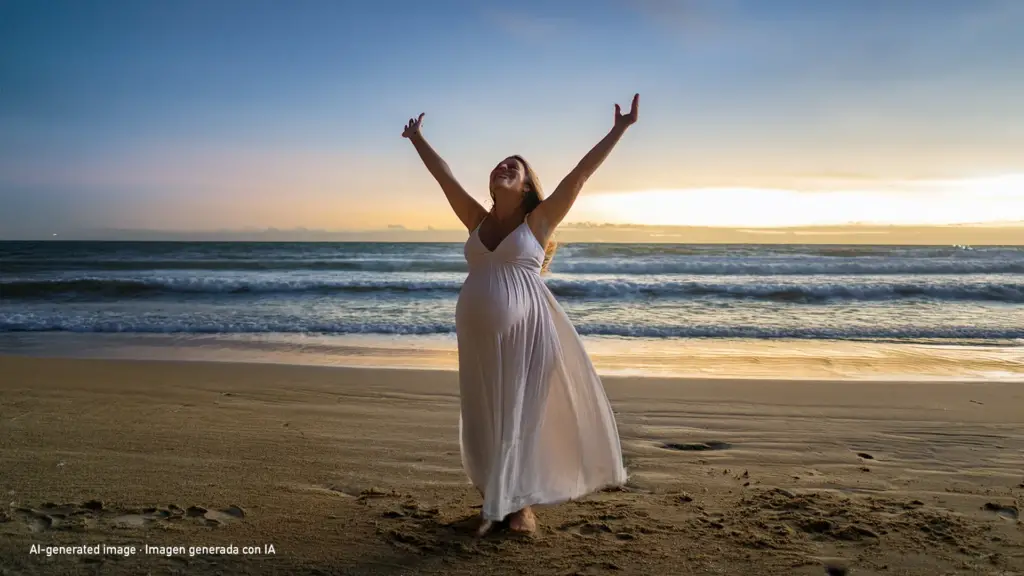
This is the pose people never expect to love until they see their own photos. Arms raised above the head — wrists crossed, hands clasped, or simply open to the sky — does something remarkable for a maternity portrait: it lengthens the entire body, draws the eye upward, and reframes the bump not as something being hidden or managed, but as the centerpiece of a body doing something extraordinary.
It’s not a delicate pose. It’s a confident one. And on a beach at golden hour, with the sky behind you turning amber and rose, it photographs like nothing else.
What makes it work on the beach: The open sky becomes a backdrop for the raised arms, and the dramatic light of golden hour adds natural intensity. Best shot from a slightly lower angle looking up.
Golden hour is essential for this pose — read more about why in Chasing the Golden Hour: The Secret to Magical Sunset Photos in Puerto Vallarta .
4. Seated in the Sand
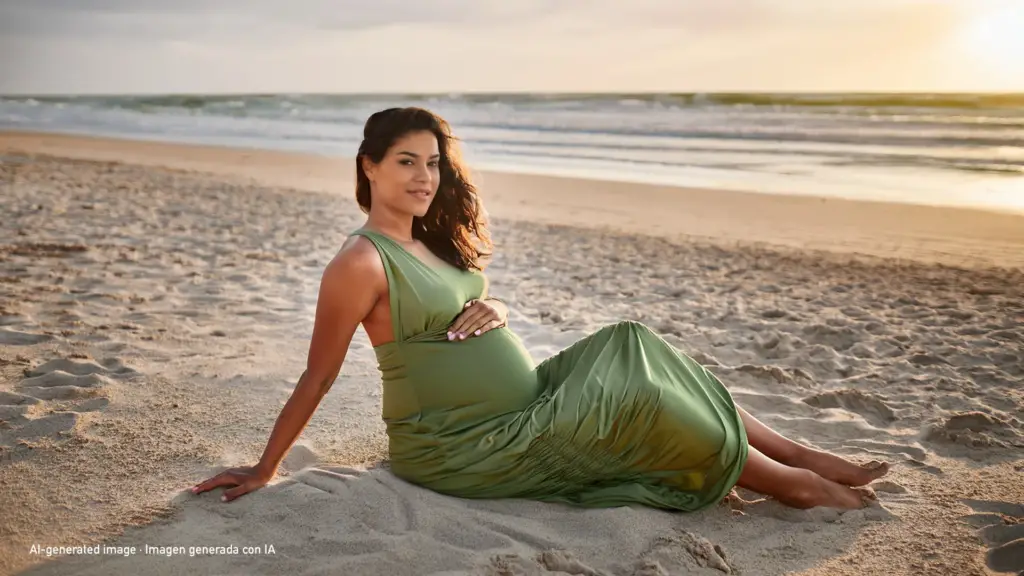
Not every pose needs to be vertical. Seated maternity portraits have a softness and intimacy that standing poses sometimes don’t — and on a beach, the sand itself becomes part of the composition.
Sit with both legs gently to one side, leaning back slightly on one arm while the other hand rests on or cradles the bump. The key is the angle — never face the camera straight on from a seated position. Turn slightly so the bump reads clearly from the side, and let the body language be relaxed rather than rigid.
What makes it work on the beach: The sand provides a natural, textured surface that adds warmth to the image. The low angle also gives the photographer the option to shoot with the ocean horizon as a backdrop, which produces a clean, expansive composition.
5. The Couple — Him Behind Her
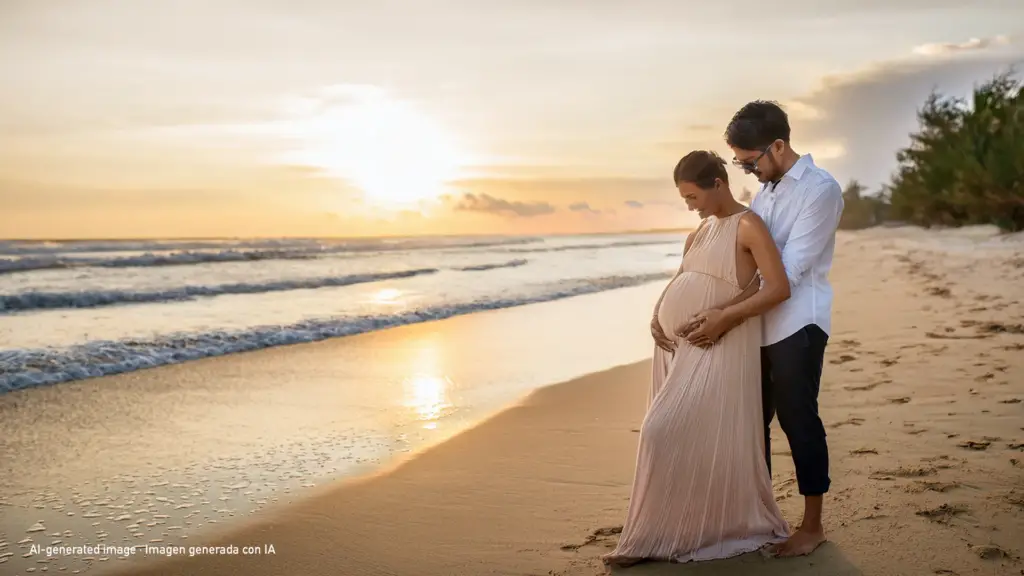
Including your partner in a maternity session is always worth doing — and the position that works best is almost always him behind her, both facing the same direction or slightly toward each other, his hands resting gently on the bump from behind.
This pose works because it tells a complete story in a single frame: two people, one moment, everything about to change. It also solves a common compositional problem — when two people face each other directly, the bump disappears between them. From behind, it remains front and center.
What makes it work on the beach: The sunset behind the couple produces natural backlighting that wraps both subjects in warm light, and the ocean provides a timeless backdrop that never dates the image.
For more ideas on couple and partner poses during maternity sessions, see Love in Paradise: The Ultimate Guide to Couples & Engagement Photography in Puerto Vallarta .
The 4 Poses to Avoid
These aren’t mistakes that come from carelessness — they’re natural instincts that happen to work against the camera. Knowing them in advance means your session flows better and your photographer spends less time correcting and more time shooting.
1. Facing the Camera Directly — No Angle
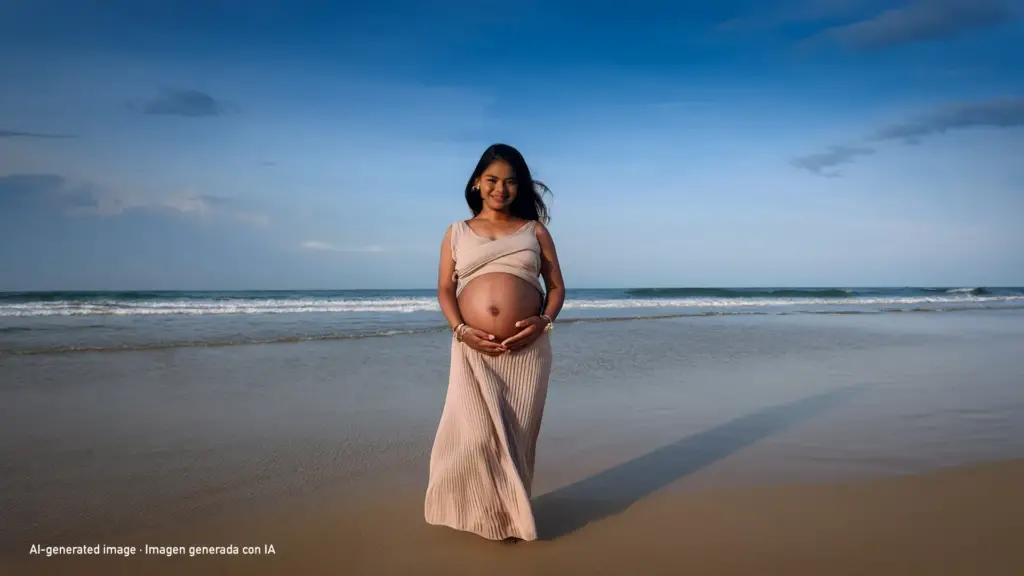
This is the most common instinct and the most common problem. When we stand for a photo, we naturally face the camera. For most portraits, that’s fine. For maternity photography, it flattens the bump almost completely.
From the front, a 32-week belly reads as perhaps a third of its actual size. The profile — or even a three-quarter turn — can triple the visual impact of the same bump. If there’s one thing to remember before your session, it’s this: turn to the side.
2. Arms Crossed Over the Bump
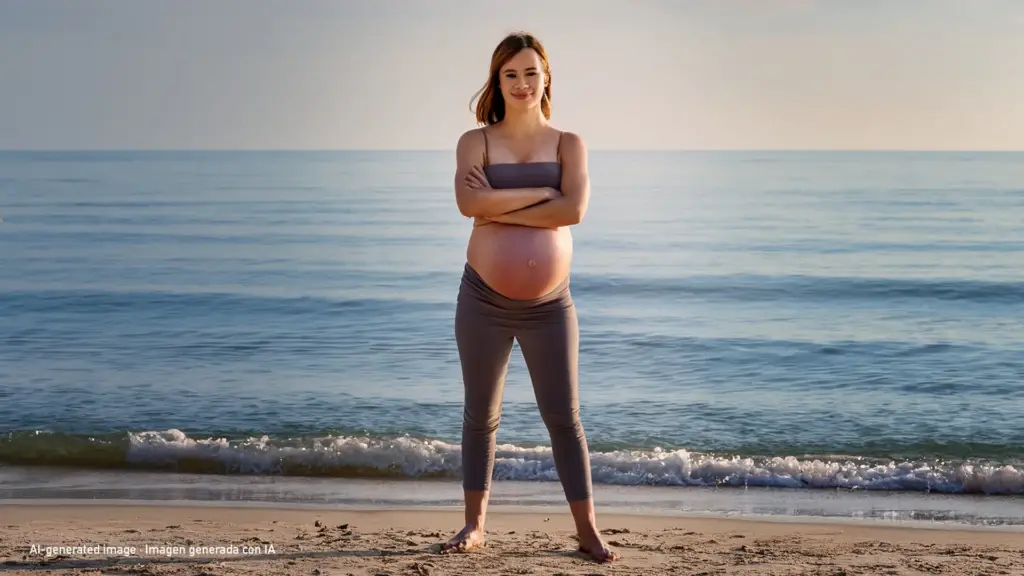
Crossing the arms over the chest is a self-protective posture that most of us default to when we’re nervous or unsure what to do with our hands. In maternity photography, it does something particularly unfortunate: it covers the bump, which is the entire subject of the image.
Hands belong on or around the belly — cradling it, resting on it, framing it from above and below. If you’re not sure what to do with your hands, your photographer will guide you. The answer is almost never “cross them.”
3. Legs Too Wide, Posture Stiff
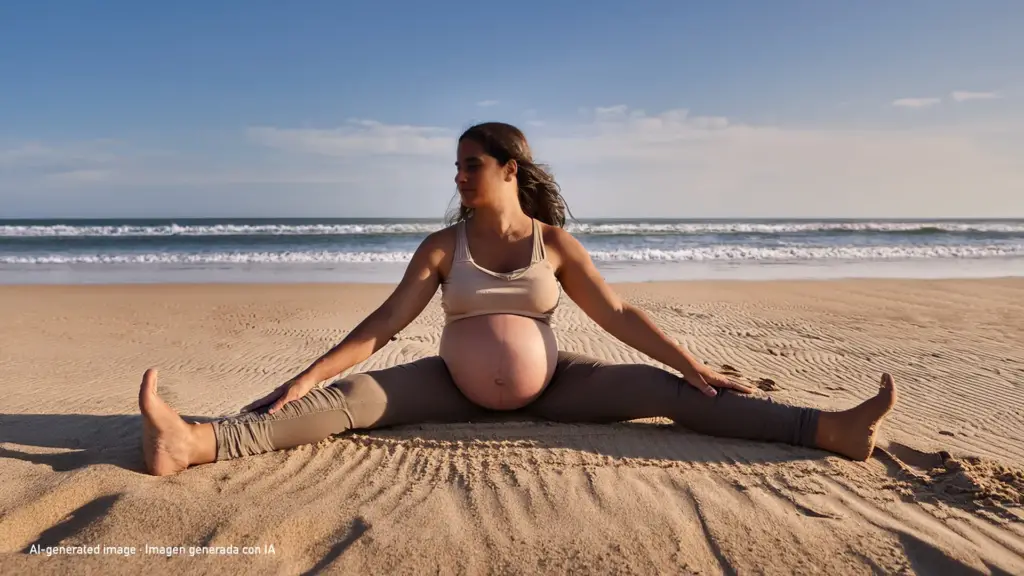
A wide stance can feel powerful in real life but tends to read as uncomfortable or unbalanced in photographs — especially on a beach where the sand and horizon provide a strong horizontal reference. Stiff posture compounds the problem: tension in the shoulders and back translates directly into the image.
The antidote is simple: feet closer together, weight shifted slightly to one hip, shoulders relaxed down and back. This small adjustment changes the entire energy of the frame.
4. Partner Blocking the Bump
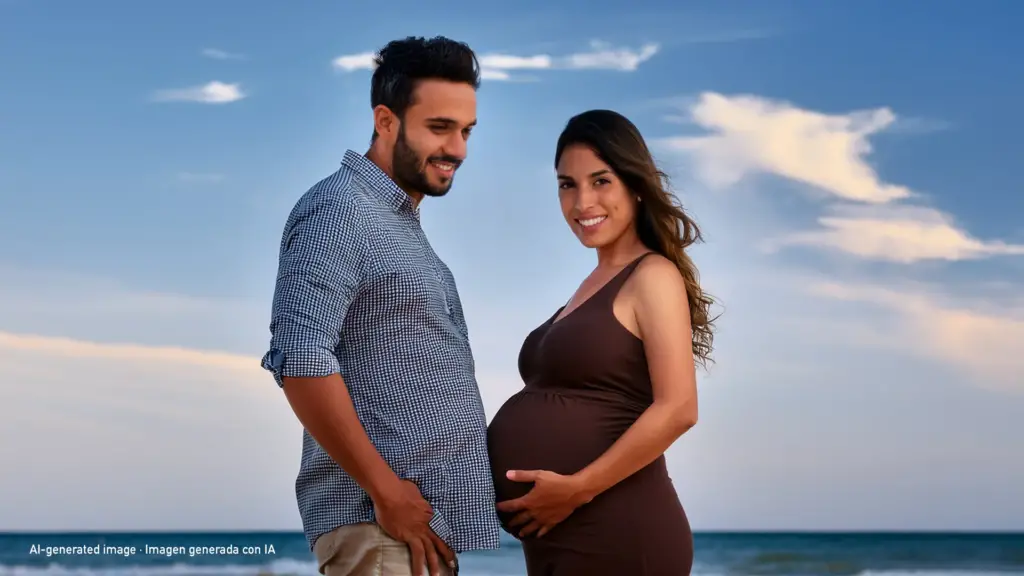
When couples stand side by side facing the camera, the partner’s body almost always partially blocks the bump — the very thing the session is meant to celebrate. It’s not anyone’s fault; it’s just geometry.
The fix is positioning: him behind her, or her slightly in front at an angle, so the bump is always visible to the camera. A good photographer will guide this naturally, but it helps to know why the positioning matters before you arrive.
A Note on Comfort and Timing
The best maternity poses are also the most comfortable ones — and comfort shows in photographs. If a position feels forced or physically demanding, it will read that way in the image.
Most maternity sessions in Puerto Vallarta work best between weeks 28 and 34, when the bump is fully visible but mobility is still comfortable. Sessions are timed around golden hour — that 45-minute window before sunset when the Pacific light is warm, directional, and extraordinarily flattering.
Wardrobe deserves its own conversation, because the dress you choose changes which of these poses are even available to you. A gown that catches wind gives you movement to work with; a stiff one leaves you standing still. What to Wear for a Maternity Beach Photoshoot covers fabrics, colors that work in coastal light, and the four mistakes that cost people their best frames.
For everything else — timing, what to bring, how the session actually runs — How to Prepare for a Professional Photoshoot in Puerto Vallarta walks through it.
And if you’d like to talk through locations, packages, and availability for your maternity or babymoon session in Puerto Vallarta, I’d love to hear from you.
📩 info@antoniovargasphotos.com · WhatsApp: +52 442 592 7976
View maternity packages and book your session at maternity.antoniovargasphotos.com __